


 Back
Back This section looks at how to manage exams each term. This includes information about what to expect, how to prepare for an exam and practical tips to help you perform well. Students who are autistic may feel more anxious during this time on campus.
Exams at SETU include Christmas exams and Summer exams with repeat exams in August. Depending on your course you may have continuous assessment, project work/presentations and formal assessments each term.
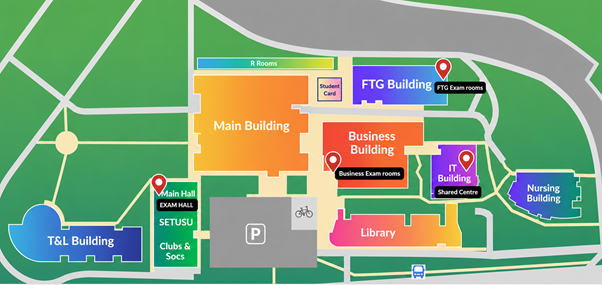
Background
You will have experience of exams from secondary school. Most commonly exams take the form of a set of questions that you need to answer and are a way of measuring your knowledge in that particular subject. Exams are timed and will often take place in a controlled environment with an invigilator present. All students will feel stress at some point during their studies. You are not alone.
Make sure to check your student email and Moodle regularly for updates. Check your exam timetable ahead of time. If you are in a different exam hall (not college hall) your school office will email you to let you know the room number.
How could this affect me?
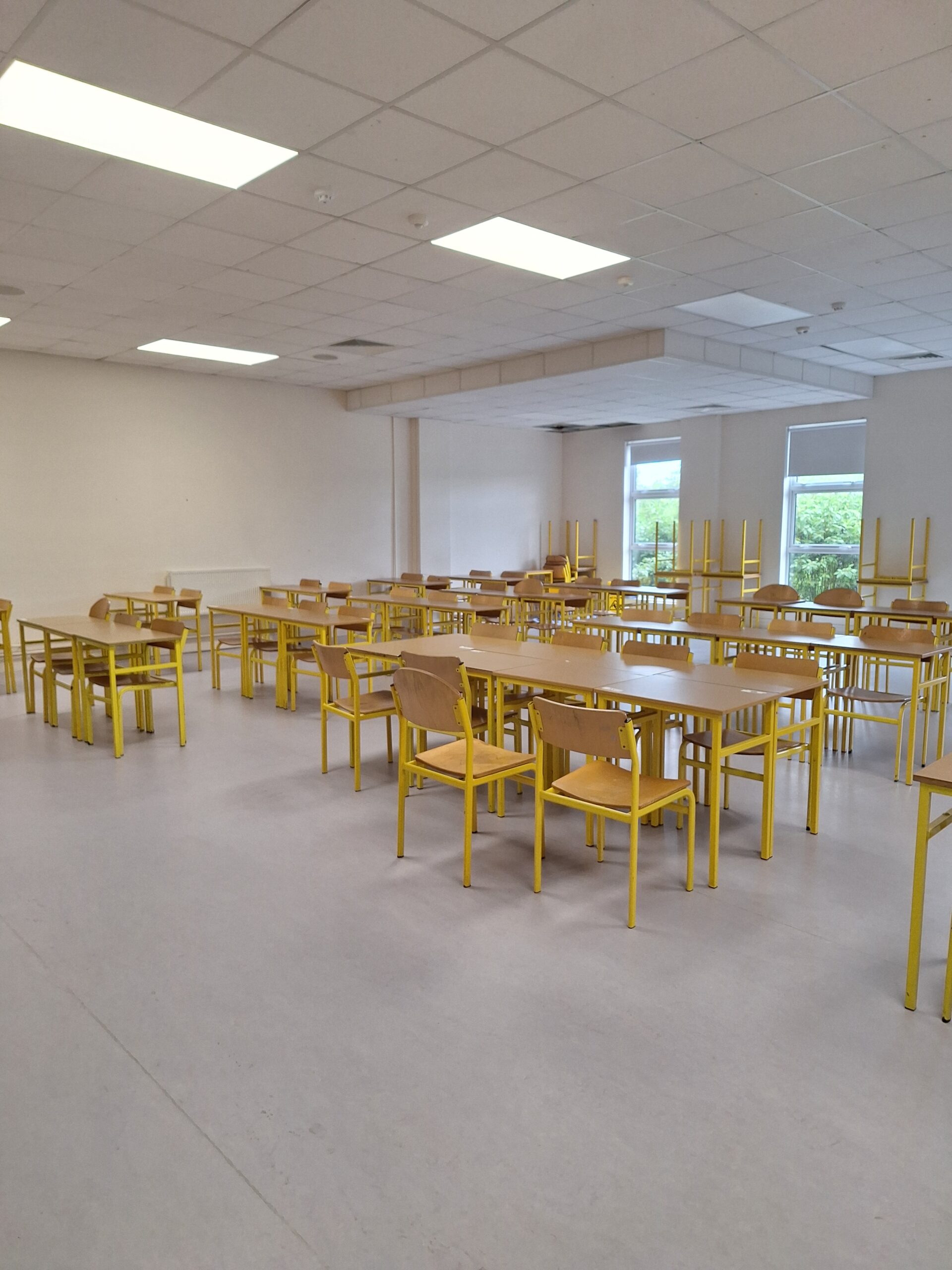 FTG exam hall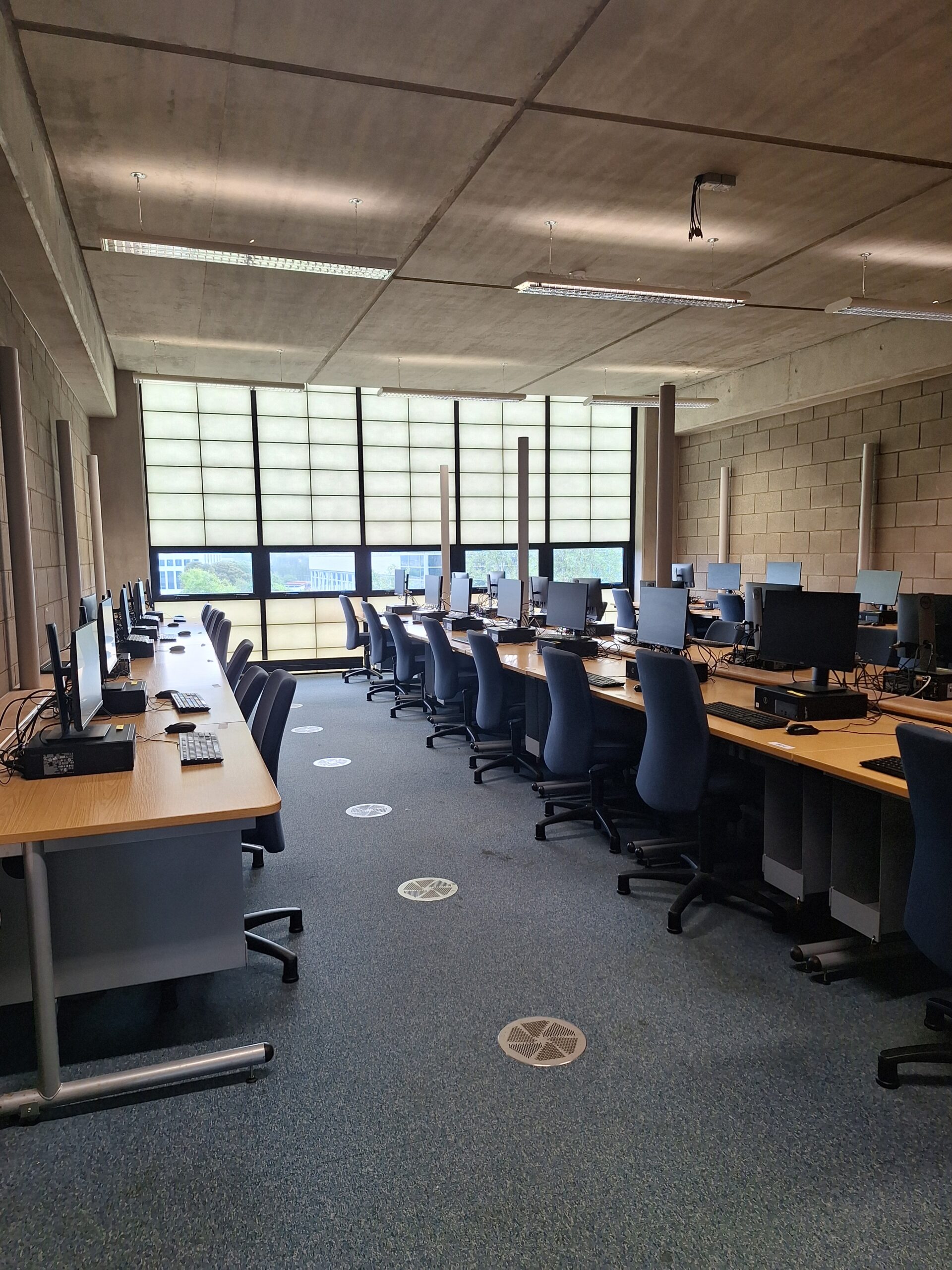
IT221 exam hall Walton building
For autistic students one of the challenges relates to organising a revision timetable and not becoming overwhelmed by all of the reading material. This is where checking in with your tutor in ASC (library) can help you prepare ahead of time. They can help you improve your skills in reading the exam paper and timing out the exam answers.
Study tips to help
-make out a timetable
-go over past exam papers
-mind map out answers
-use a study buddy
-use colour to highlight important areas
-chunk information/ use mnemonics
What to do next?
Prepare for the exam/see your tutor
Practical tips
These tips are intended as a guide so you can pick out the ones that are most helpful to you.
Listen to our study podcast with Megan & Imelda from SLL Study, Work, Repeat? – SETU Podcasts
Before the exam
- Many autistic students find it difficult to revise and to take regular breaks when revising. It can be helpful to set a timer to help or use a study buddy.
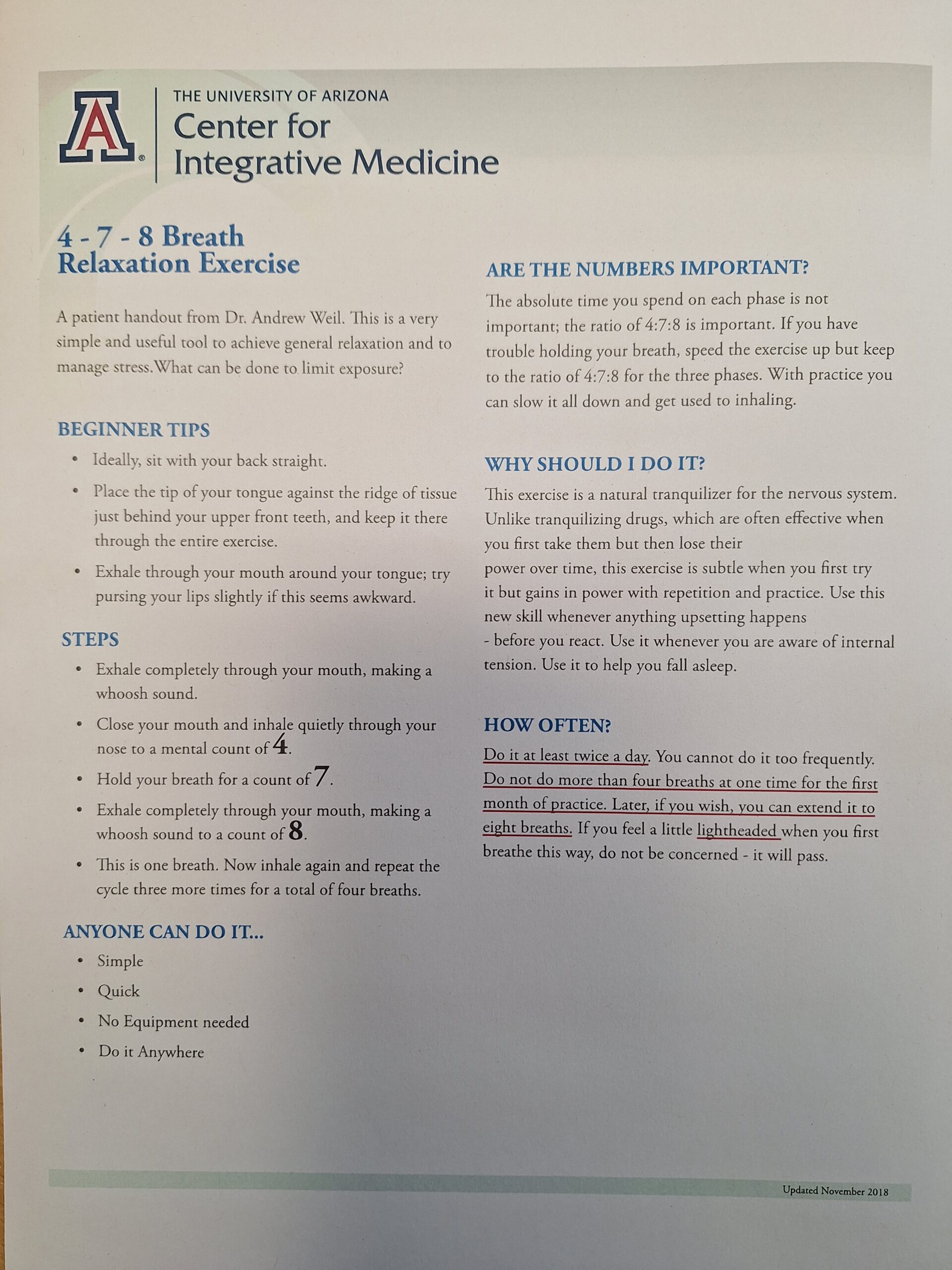
- Many students report that mindfulness meditation or breathing techniques help them to relax before an exam. See below image
- If possible visit the rooms where your exams will be taking place in advance.
- Making a mind map and taking notes which you could display in a visible area can help with study.
- Get as much rest as you can, 6-8 hours a night is recommended.
- Try to eat at least one proper meal a day and that you stay properly hydrated.
- Try to exercise daily as this will help relax tense muscles, use up any excess adrenaline and increase circulation.
During the exam
- If you feel anxious when you enter the exam room, practice breathing exercises to keep calm-see image below
- Make sure you are sitting comfortably. Place your feet firmly on the ground and relax your shoulders
- Take a few seconds before turning over the exam paper to let the initial feelings of anxiety subside
- Plan your answers out briefly to ensure adequate time for each question. Before you start writing have a look through the exam paper.
- Stay hydrated throughout the exam by drinking plenty of water take short breaks at the end of each question.
- If you feel unwell during an exam alert the invigilator.
After the exam
Drop by SLL for a cup of tea and a snack-we always provide a relaxation table with some treats!
Consider what went well and what didn’t go so well. Use that knowledge to inform you on how you prepare for your next exam-check in with your ASC tutor
Don’t be too self-critical. It’s common to have doubts about your performance after the event
Whatever the outcome congratulate yourself for taking the exam and all your hard work!
Questions to think about
Go visit the building where your exam will be held
Maybe listen to a podcast to help
Student Wellbeing Matters ft. AnnMarie Quigley – SETU Podcasts
practice some breathing techniques to help (see below)
Additional information
 click to expand
Exam arrangements
If you think your autism impacts upon your ability to perform in an exam then discuss this during your first Needs Assessment when registering with the Disability Office. Or check in for a review.
Common adjustments that can be arranged such as extra time, use of a computer, quieter exam hall and maybe the opportunity to sit your exam in a separate room. Considered on a case by case basis.
Deferral/ Mitigating Circumstance
If you don’t feel well enough to sit your exams because of a physical or mental health reason you can apply for extenuating circumstances.
There may be the opportunity to re-sit the exam during the later session (often the late summer period-August). The general advice is that if you don’t feel ‘fit to sit’ the exam then it is better not to. If you attend the exam and your performance is compromised by illness/bereavement then apply for mitigating circumstances after the event. SETU | Mitigating Circumstances
For further details about the deferral process contact the Retention Officer, retention.wd@setu.ie.